
Since Steve Ells began Chipotle in July 1993, the offerings have always been quite limited. At its core there’s only so many items to mix and match on the entrée selection. And sure, this ultimately yields millions of permutations but the genius behind the fast casual concepts like Chipotle have been in the simplicity of choices. Burrito, tacos, salad or bowl? White or brown rice? Black or pinto? And so on as you move down the line.
And for the longest time this philosophy of fewer choices has worked well for Chipotle. While other fast food restaurants have more prolific R&D departments (I’m thinking specifically of Taco Bell with their incessant brand collaborations), Chipotle has not been a company that has featured too many new innovations—at least not until about the last decade.
Chipotle’s foray into limited time offerings have been methodical. Most of the time they unveil a new meat option, such as the carne asada or chicken al pastor that give customers a chance to try a slightly new option for a few months. Other times they experiment with more permanent options, such as the Chipotle queso or even their sofritas further back. But there’s always a deliberate attempt to add items that fit into the brand’s ethos of fresh, sustainable ingredients. And while they’ve collaborated with celebrities similar to, say, McDonald’s, it’s more often than not been an advertisement of that individual’s favorite Chipotle order, nothing more.
Their latest offering that I’ll be reviewing today is their red chimichurri. It’s a simple side item with a short list of ingredients: sunflower oil, roasted garlic, cilantro, lime juice, chile peppers, and red wine vinegar. It’s made in house every day and can be purchased for a dollar.
I have had it a few times since it launched. I wanted to try it with the carne asada as that seems to be the recommendation from Chipotle for the ideal pairing (which aligns with any typical chimichurri recipe anyway). I also wanted to try it with my Chipotle protein of choice—their chicken.
First impression of the red chimichurri is that it’s quite oily. The contents of the sauce have both times been suspended in a fair bit of sunflower oil. One could argue the correct proportionality of a typical chimichurri. But for my own preferences I would have preferred a tighter sauce with about half as much oil. It would make for an easier pour if I knew I wasn’t pouring straight up oil into my burrito. I was able to get around this by scooping the chimichurri suspension on to my burrito instead, leaving most of the oil behind in the plastic container.
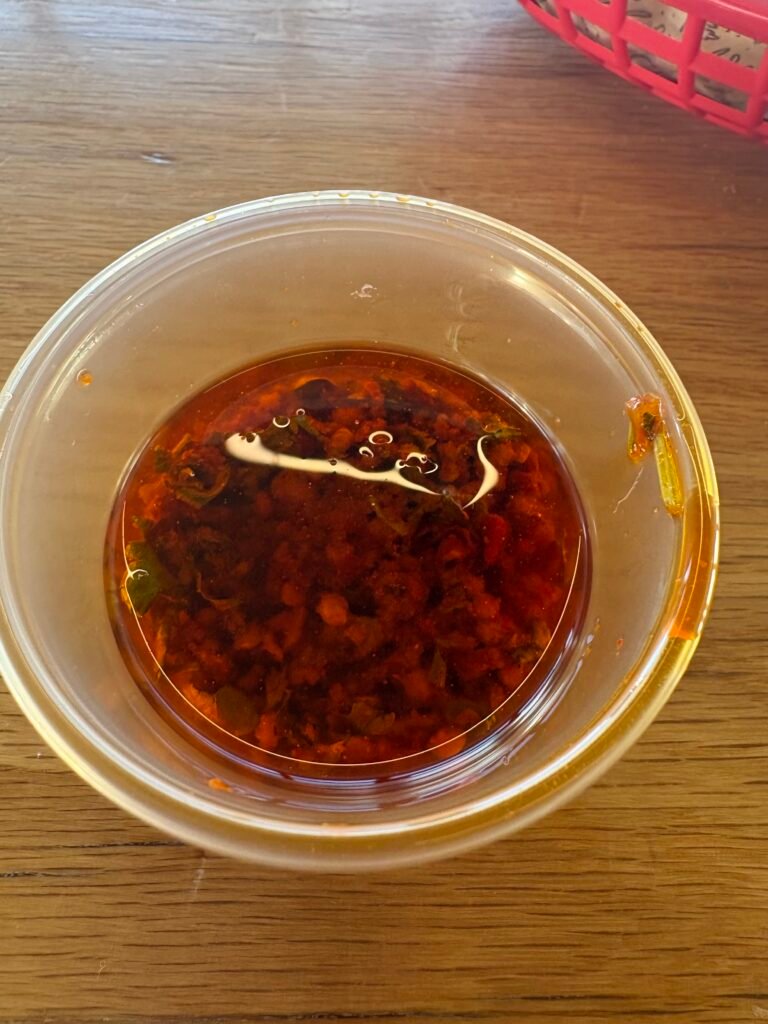
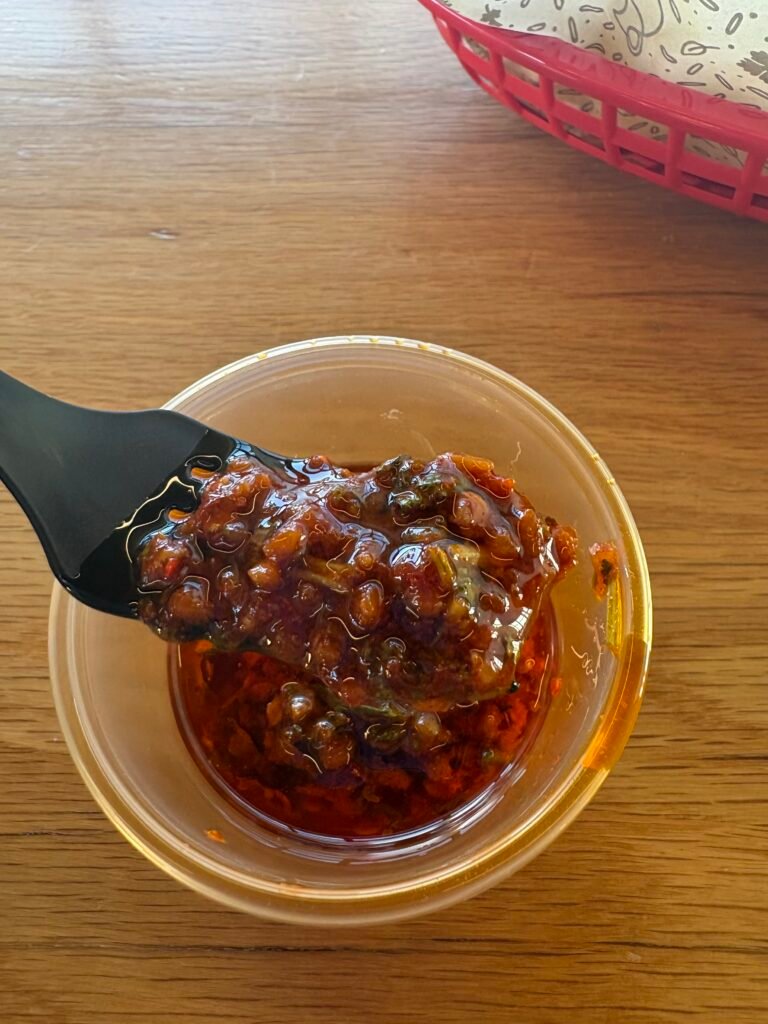
I’ll tell you what. That’s not a bad approach. The chimichurri is potent. I found that when I had a full fork’s scoop worth smeared on, the next bite of my burrito lit up like fireworks with the intense flavor of the chimichurri. Ultimately, I settled on a light smear to allow the flavors of the burrito itself to still shine through.
My immediate takeaway is that it’s a pretty good offering. The most forward flavors are the peppers and the roasted garlic. It’s not overly spicy but it does pack a bit of a kick. And I think it brings the burrito to life. The back notes I was getting with the chimichurri were mostly the lime juice and the red wine vinegar. I found it to be a bit sour on the back of my tongue. I couldn’t really determine if I liked that. After each bite my mind was debating whether I wanted to keep going but my hand kept instinctually reaching for more. I would chalk that up as a point for the chimichurri.
I found that I appreciate the chimichurri more with the carne asada than I did with the chicken. While I can’t particularly compliment the carne asada itself (I very much think Chipotle’s steak options are overcooked and dry), there is still a meatiness that the oil clings to and amplifies. This phenomenon was less present with the chicken. In fact, I found the flavor of the chicken more or less subdued by the profile of the chimichurri.
On the whole I appreciate its complexity. It adds a funkiness to the burrito that livens it up. The pitfall of a restaurant that rarely adds new ingredients is that the experience can become stale. I think most of all that’s what I found I liked about the red chimichurri. It slotted in nicely into the flavor profile and elevated the experience without setting off alarms that something was amiss. It belonged.
I don’t fully expect this to become a permanent fixture on Chipotle’s menu. I reckon it’s not a hugely laborious task to assemble the recipe every day, but it’s not the modus operandi of this company to permanently affix ingredients to the lineup. I suggest you try it while its here, because the Chipotle Red Chimichurri is Lunch Break Approved.
I think chipotle is at its best when it’s delivering its core ingredients at top potential. The gimmicks and limited release items don’t move the needle for me and they certainly don’t need them. My issues with chipotle all stem from store operations and experience and consistency.