
In October 2025, Reverie served its last customers and shuttered its doors for good—ending a truly tumultuous run that saw the restaurant grit its way through a global pandemic, earn a Michelin star, and then have to pick up the pieces left after a fire that forced the restaurant into an 18-month hiatus of renovation and rediscovery. But after nearly a decade of highs and lows, Chef Johnny Spero decided to end the Reverie chapter of his life “on [his] own terms”.
I was lucky enough to get to dine at one of the final services of the famed Georgetown restaurant, experiencing a menu that felt like a celebration—or at least a silent reflection—of the elements that made Reverie such a marked mainstay in the DC and Georgetown dining scene.
While Chef Spero has not elucidated the exact reasons for the abrupt closure of his Michelin star restaurant, I do cheekily wonder if its obfuscated entrance did it any favors. A carefully placed sign on Grace Street leads customers on a scavenger hunt down a dank alleyway. And at the back of the alley is the Reverie marking that leads into a covered patio with a stone walkway and a bench occupied by a very tranquil cat named Poppy who had claimed full dominion over the space.
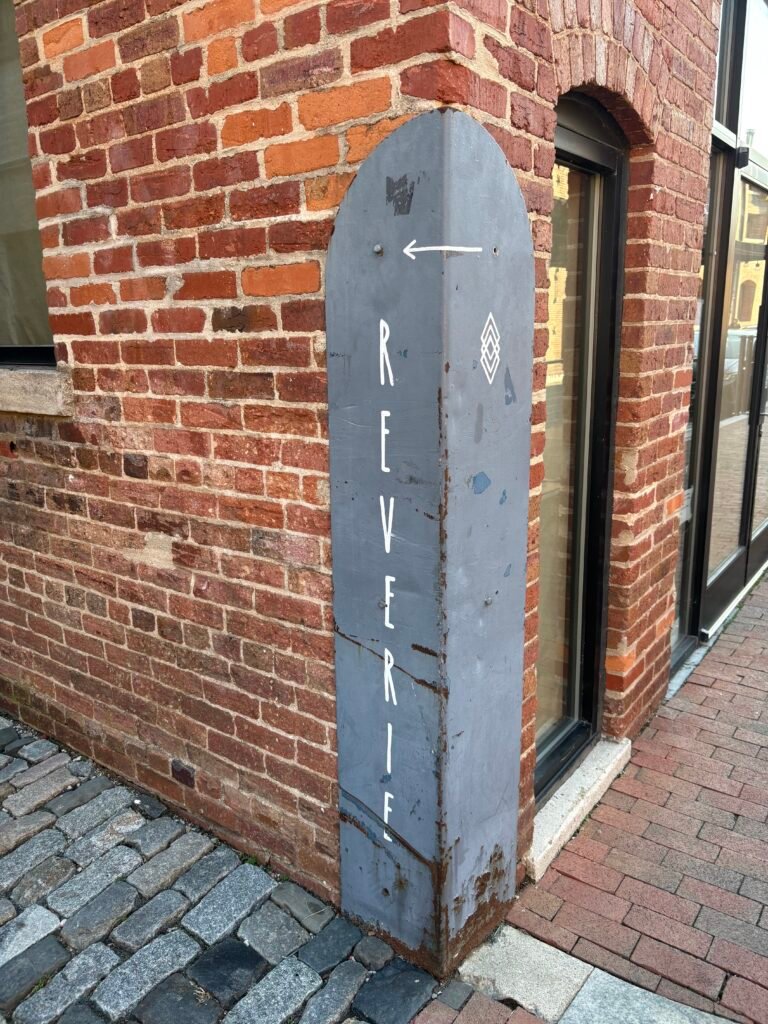
(I have it on good authority that Chef Spero has reached a covenant with this neighborhood cat to keep all manner of vermin at bay in exchange for Reverie nibblings—a very balanced exchange.)
We were greeted on the patio and ushered into the restaurant—a slight room divided into two halves: an open kitchen where staff silently bustled around a large island tending to their preparatory work, and a small dining room with about ten tables starkly facing the kitchen. It was an intimate affair.
Our reservation was early and the arrival of the guests at the other tables was staggered throughout the night, so for at least half the meal we were one of only two tables seated. That coupled with the lack of a boundary between the kitchen and the dining room created an unsettling feeling that I was being closely watched by the staff.
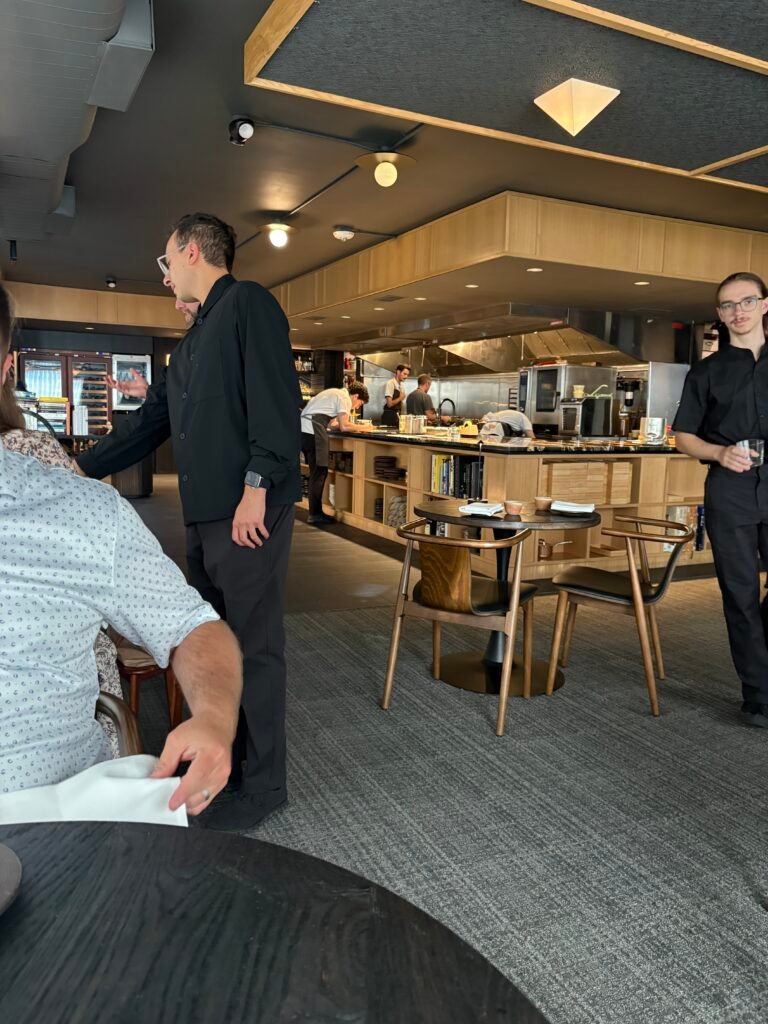
The service was adequate. This was admittedly the part of the experience I was most anxious about leading up to the reservation. The cold reality of a restaurant closing means staff will soon find themselves out of a job. With an abrupt closure of—at least publicly—a lead time of about eight weeks, I was curious to see if the staffing felt strained. To that I would posit that I wouldn’t necessarily say I felt doted on. Dishes arrived orderly and glasses stayed filled but there lacked an energy to the presentation. The script was recited for each dish, and then the waiter was gone.
Chef Spero dropped a few of the dishes himself throughout the night and in those courses we felt the passion and the influence; a chapter of the menu’s story was told. But beyond that the service was clinical.
As far as the food is concerned, a starkly different picture was painted. The menu was a collection of some of the greatest hits at Reverie and on full display with Chef Spero’s innovation and creativity. Every dish was art, constructed to weave a narrative—purposeful ingredients designed to elevate the seafood components and pack a punch.
To start off the meal, we were given a small cup of amazake: a Japanese drink that was fermented from koji and Carolina gold rice. Koji breaks down the starch of the rice into sugar to give the drink a simple, sweet flavor reminiscent of yellow corn. This was a nice dish to awaken the palate.
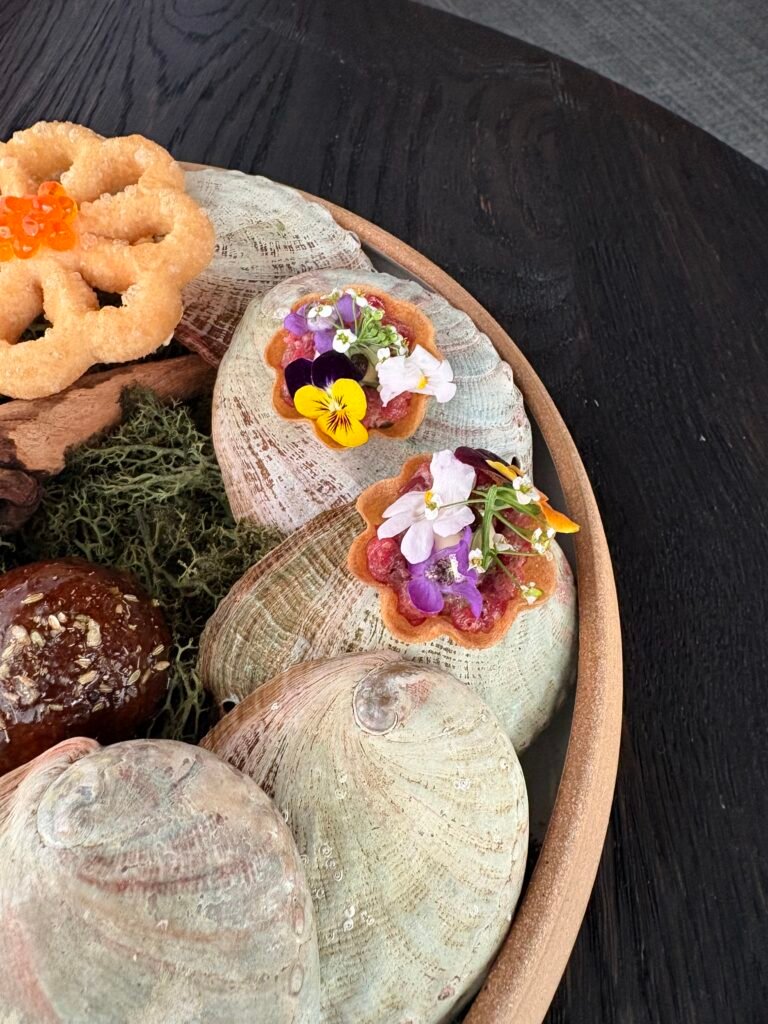
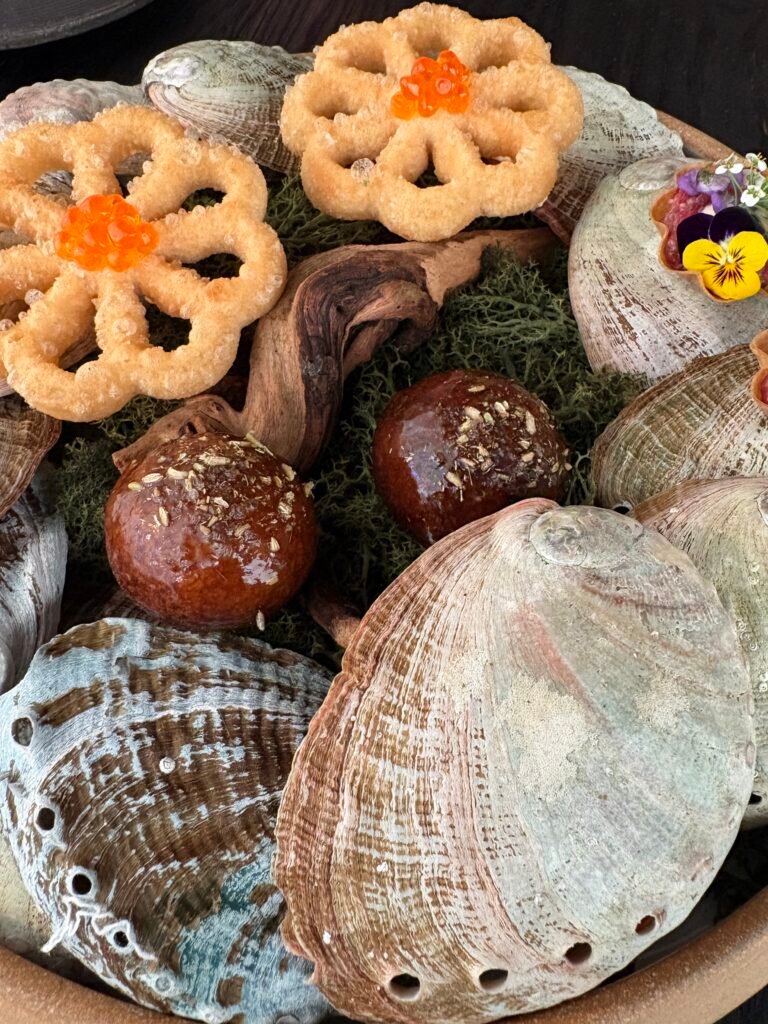
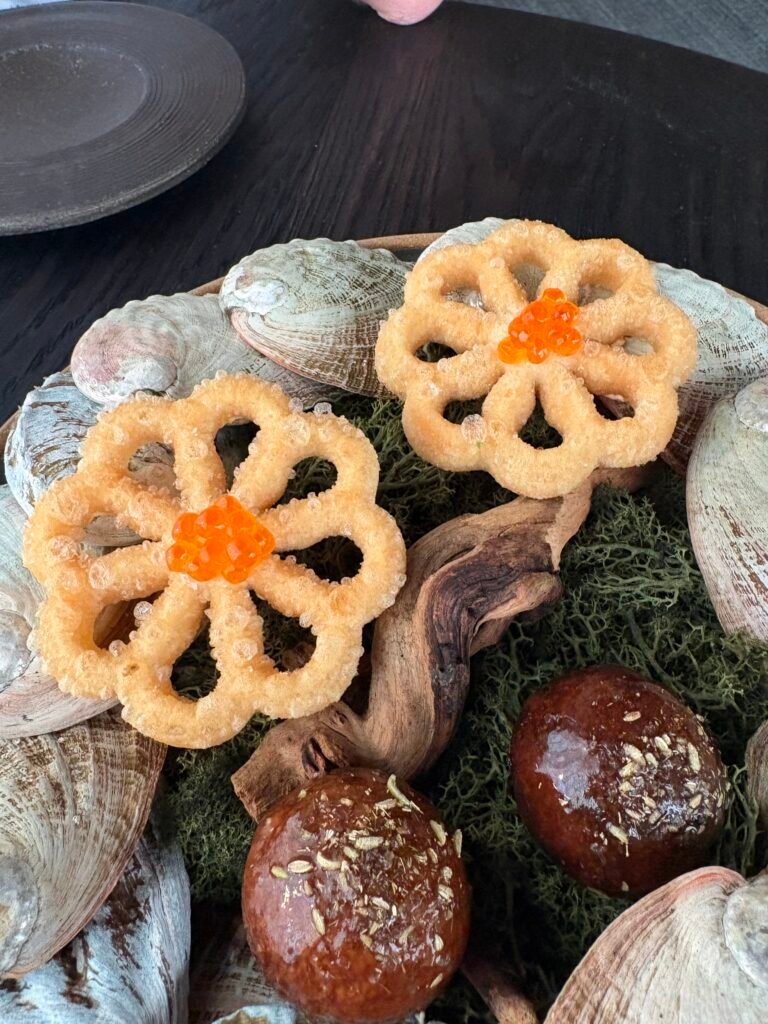
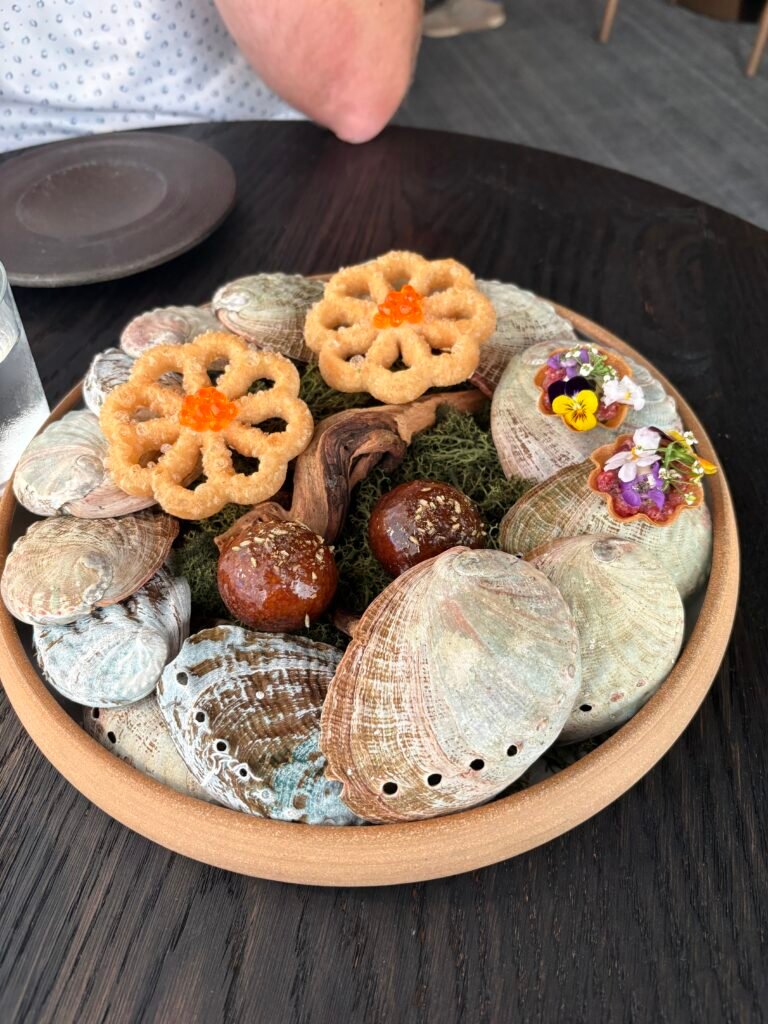
Next we received a plate of three bites served on a bed of shells and some greenery. The standout here was a king crab tart; buttery, smooth, with a rewarding crunch from the shell of the tart. There was also a lamb liver donut, and a strikingly beautiful monkfish liver rosette topped with salmon roe. All three bites were loud and punchy. If I wasn’t awake before, I was certainly at attention after that course.
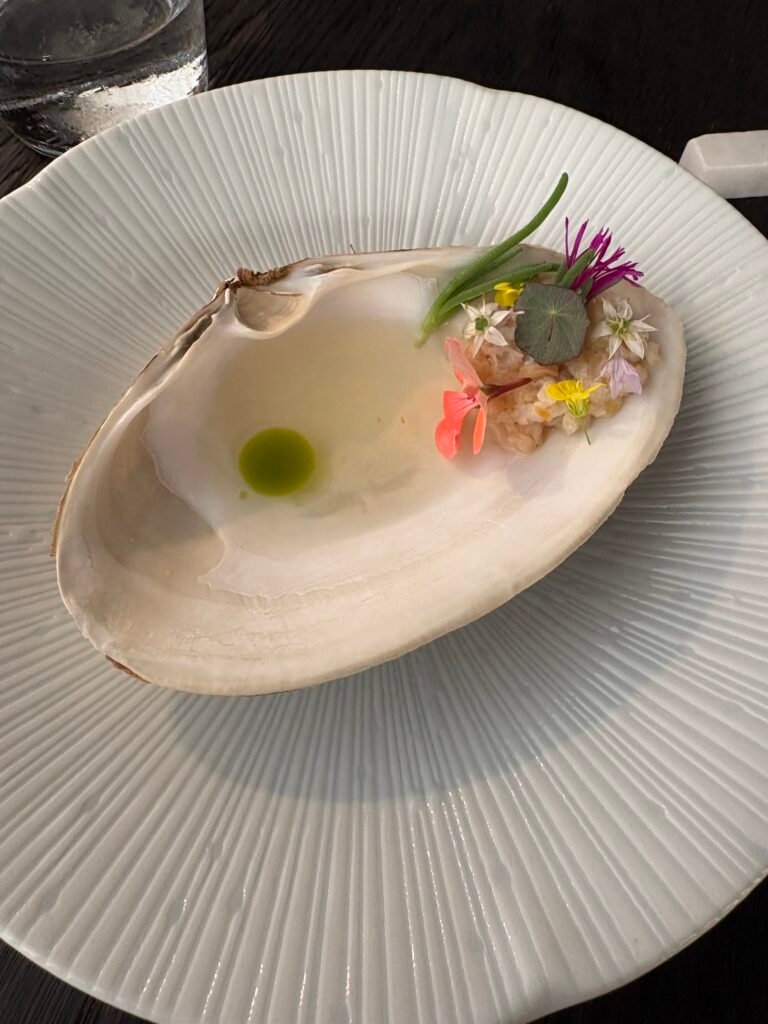
The next dish was a clam gazpacho with pickled garlic. I’m going to at some point in this review start to sound like a broken record so it might as well start here: this dish was beautiful, as are all of the dishes. This is certainly one of Reverie’s strengths. The clam was hidden underneath a bundle of foliage on the upper edge of the shell it was served on, lapping against the shoreline of the brothy gazpacho. In practice I had more difficulty eating the dish than the good fortune I had looking at it. It was difficult to navigate the shell to get equal tastes of the clam and the broth. I finally just committed first to the clam/foliage combo, and then very quickly and discreetly slurped the broth out of the shell. I don’t think anyone saw me, but I can’t say for sure. The vibes from the wait staff weren’t altered so I think I was safe.
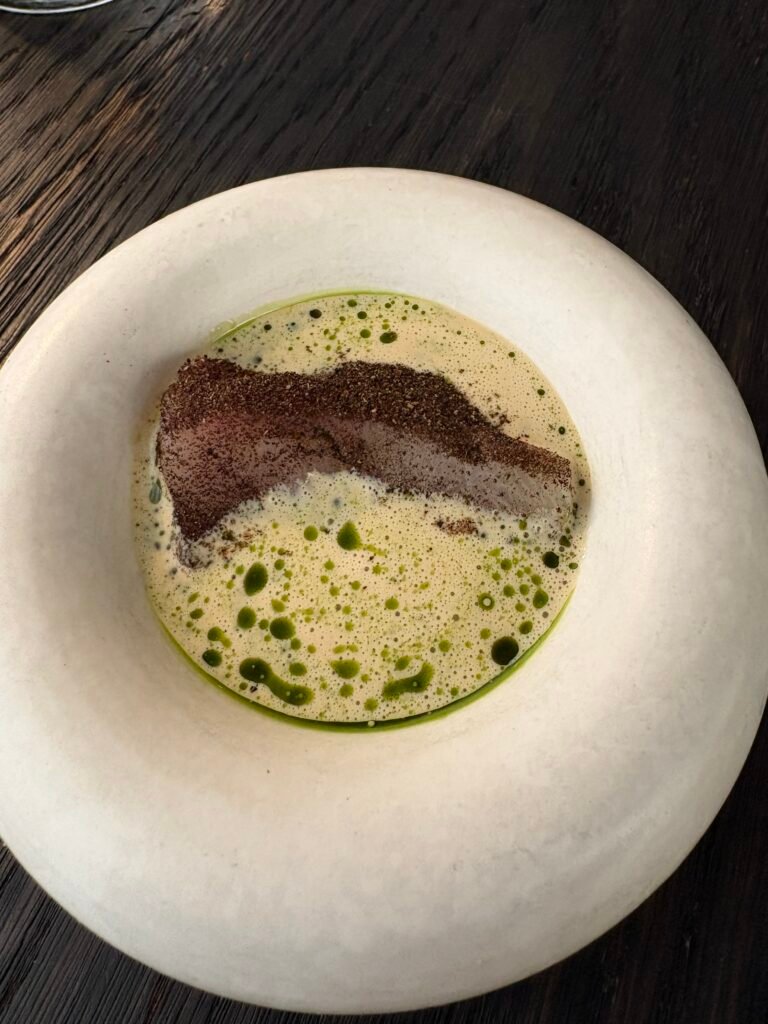
After this dish we were served hiramasa—a thick, firm piece of yellowtail kingfish peppered in an allium powder—that was served in an epazote sauce that clung beautifully to the fish. A rich, earthy, peppery combination. This plate sat heavy in the middle of the menu: a load-bearing course surrounded by softer, lighter seafood options.
The scallop in the next dish was cooked beautifully. It may have been the best cooked scallop I’ve ever had. But the shortcoming of this dish was the sauce. The scallop was coated in a thick, milky dredge derived from sidra blanc and salted berries that did not do a whole lot for me. It was served deep into the bottom of a rather tall bowl, trapping the otherwise excellent scallop beneath the weight of the sauce.
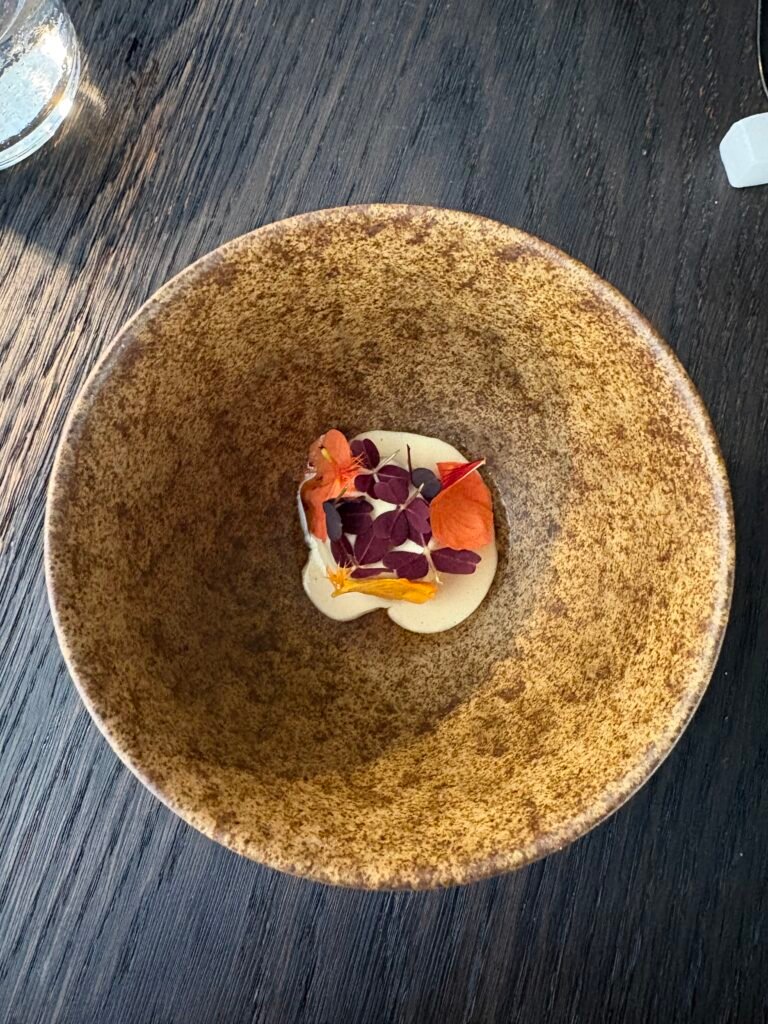
Taking a detour from a dish I did not particularly love, we arrive at one that mystified me: a savory ice cream with sunchoke and caviar. Putting aside my visceral reaction to ever receiving ice cream in the middle of a meal (read: please every chef reading this, do this more), there was something so beautifully elegant about the intersection of the caviar with the creaminess of the miso-infused ice cream. I’ve said it before and I’ll continue to say it, this time with an out of place and hamfisted sports analogy: caviar is not the leading goal scorer many in the world of luxuriant food want it so badly to be. It is an assist machine though. And on this dish it pairs perfectly with the savory notes throughout, as well as a sharp citrusy backnote that felt present for only a fleeting moment.
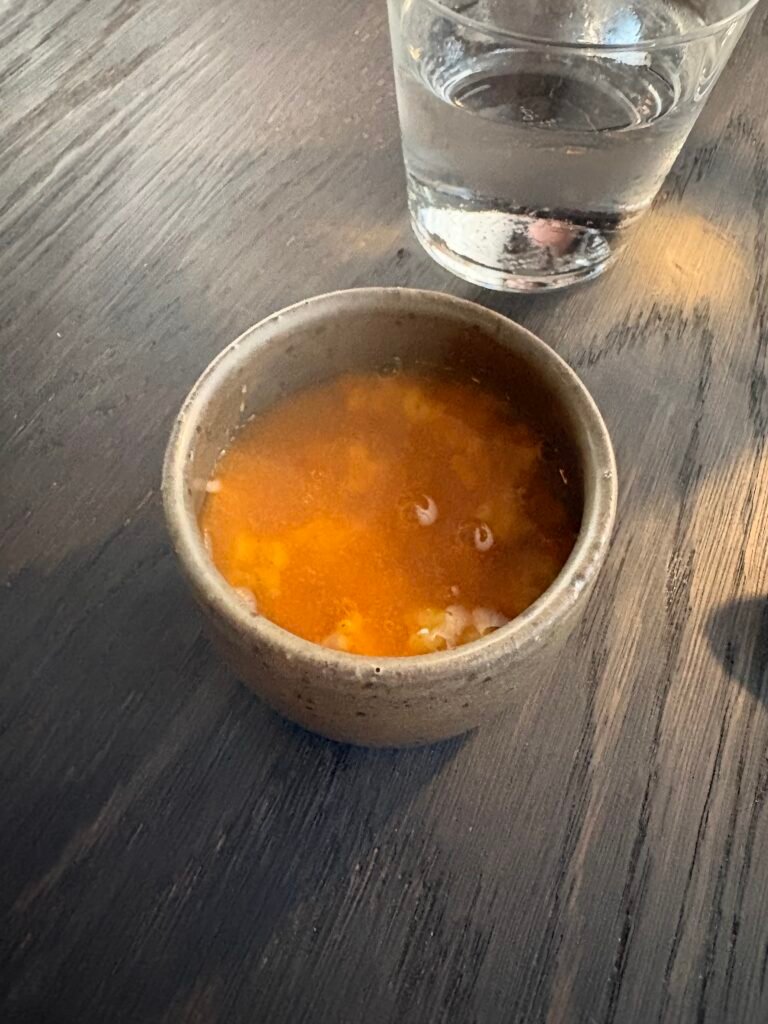
The next dish that was dropped at the table was dropped by Chef Spero himself. He wanted to articulate to us that he has come to colloquially call it a “hug in a cup” because “that’s exactly what it is”. There were a lot of elements to this dish, but the main takeaway he wanted us to have was that it was his idea of comfort. This dish felt woven into the tapestry of the restaurant; I was able to find iterations and versions of this dish dating years back into its history: a hug in a cup stays on the menu because it grounds the whole experience.
Starting on top of the cup was a fermented egg yolk which was rich and glassy. Underneath the egg was a porridge of rice. If I’m not mistaken it was a return of the Carolina gold rice featured in the amazake. Mixed into the rice was a combination of nori and eel and a healthy amount of mussels and clams. Digging deep into the cup and extracting a spoonful from the bottom-upwards yielded a medley of heavy flavors that lived up to the namesake: a hug in a cup.
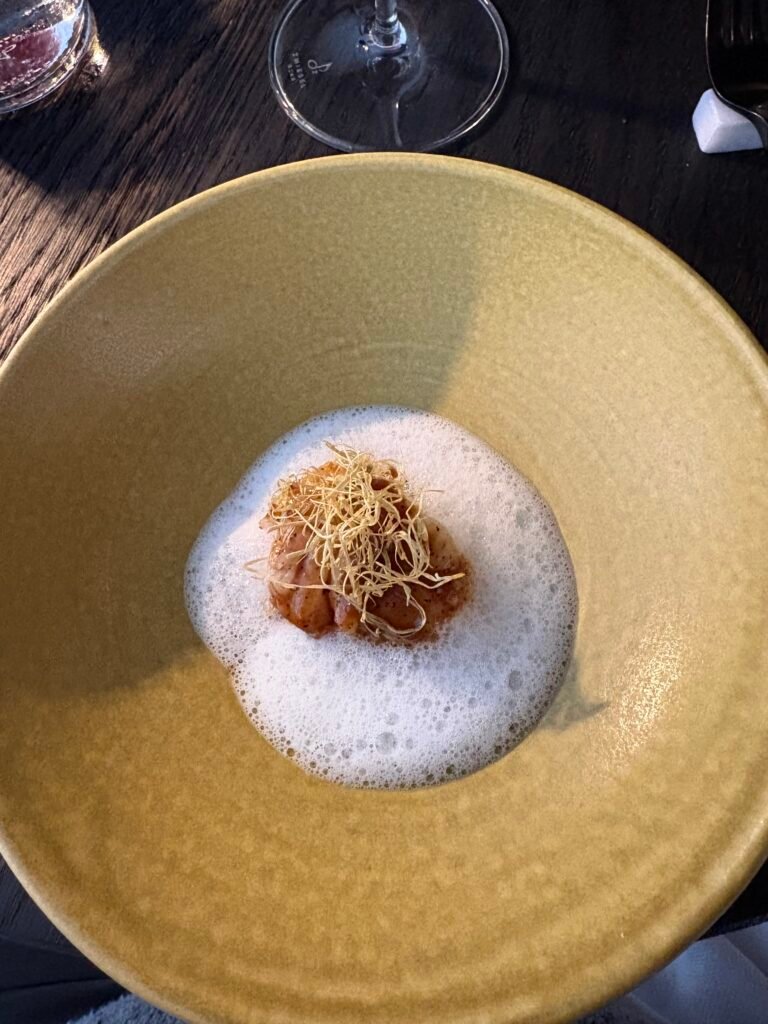
Up to this point in the meal there was a heaviness that had kept things grounded. But with the cod au poivre it was finally ready to take flight. A foamy dish complemented gorgeously by a saucy mixture of Szechuan peppercorns and confit garlic and topped with crispy shreds of battera kombu—a kelp product that provides a textural contrast to the flaky cod. It was here in this dish where the symphonies rang out. The cod was cooked immaculately. My only complaint, truly, was that I wish I had more.
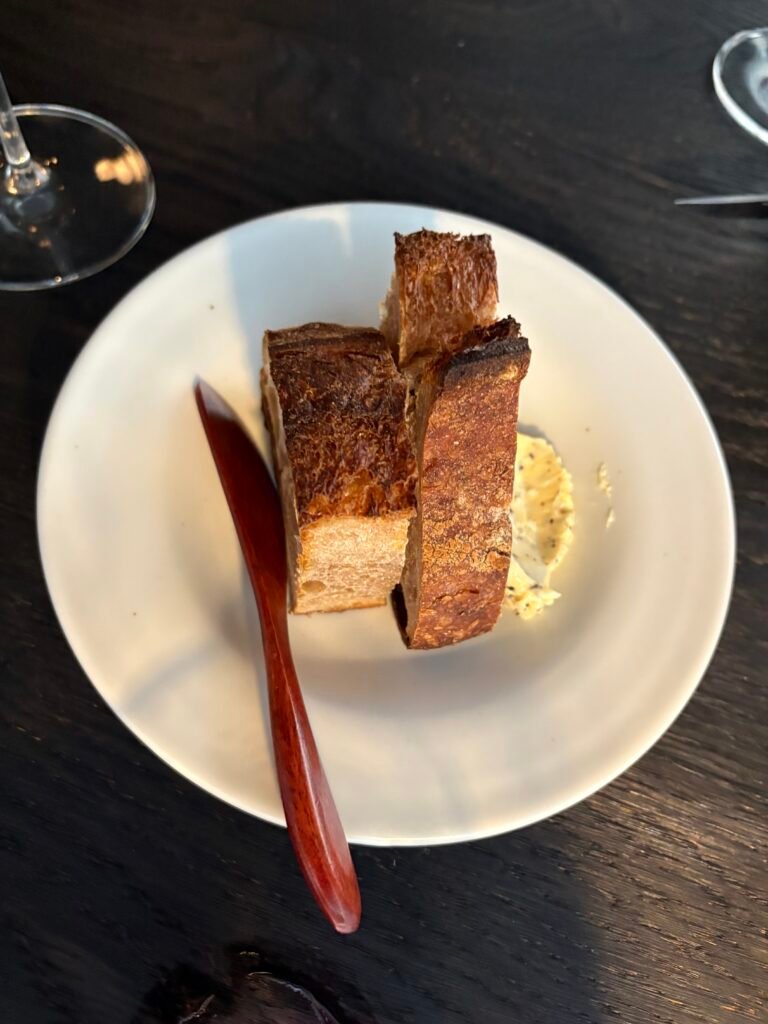
We were provided with a sourdough from a bakery in Maryland called Manifest Bread. It was served with urfa butter, and we were strongly encouraged to sop up the remnants of the au poivre sauce with the bread. From what I understand this particular bakery is a supplier of a lot of DC restaurants and for very good reason. It was excellent bread. And they were right: a little bit of leftover au poivre sauce made it even better.
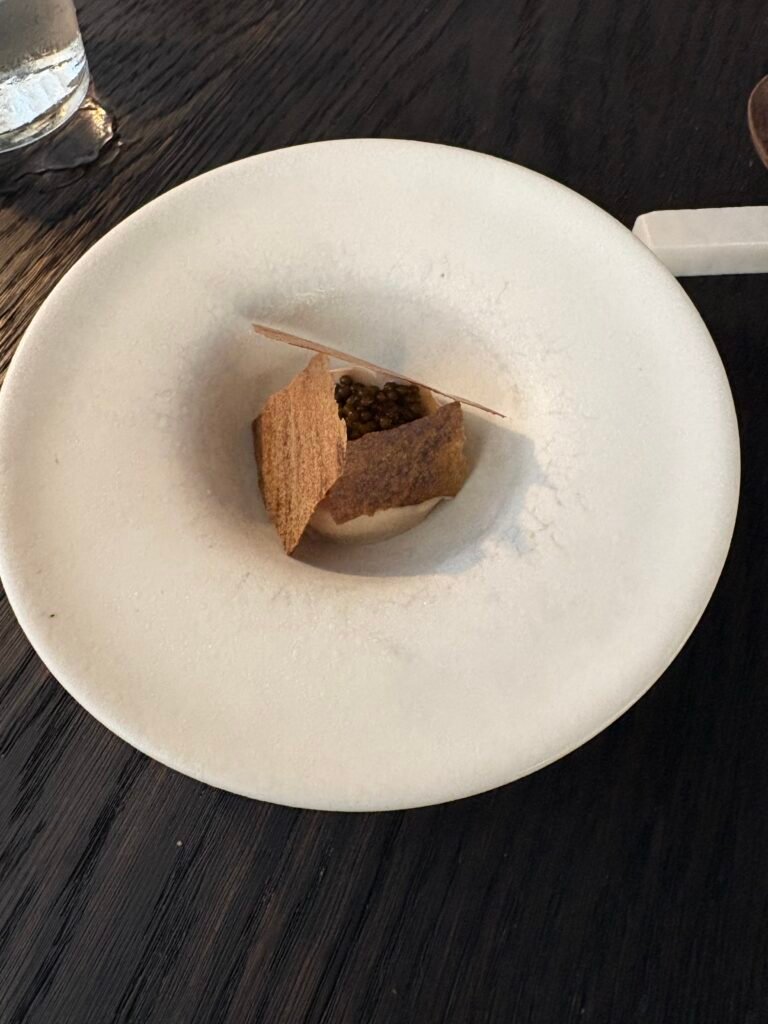
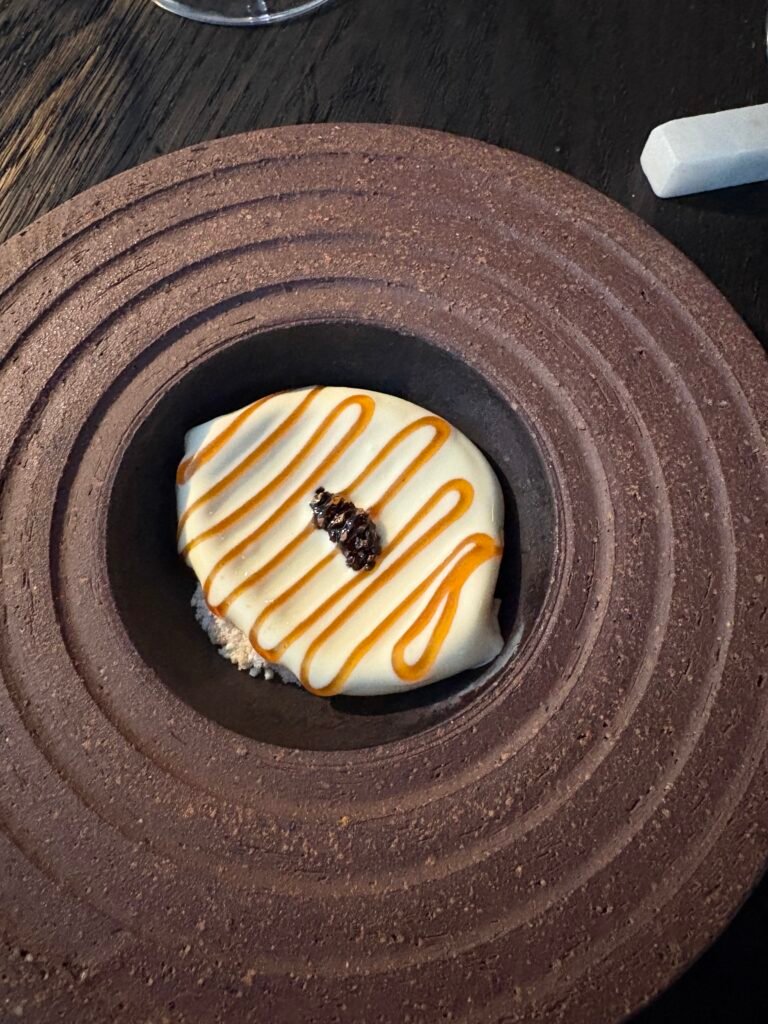
The final major component of the meal was our dessert. No less creative than the rest of the menu, the dessert was a birch bark ice cream derived exclusively from the parts of a birch tree—everything but the leaves. The honey and pollen infusion drizzled on top. Candied pine cone. I simply don’t know where something like this comes from but I’m glad it did. It was a highlight of the night for me. And I learned about myself that birch tree is my jam (well, everything except the leaves of the birch which were not featured in this dish).
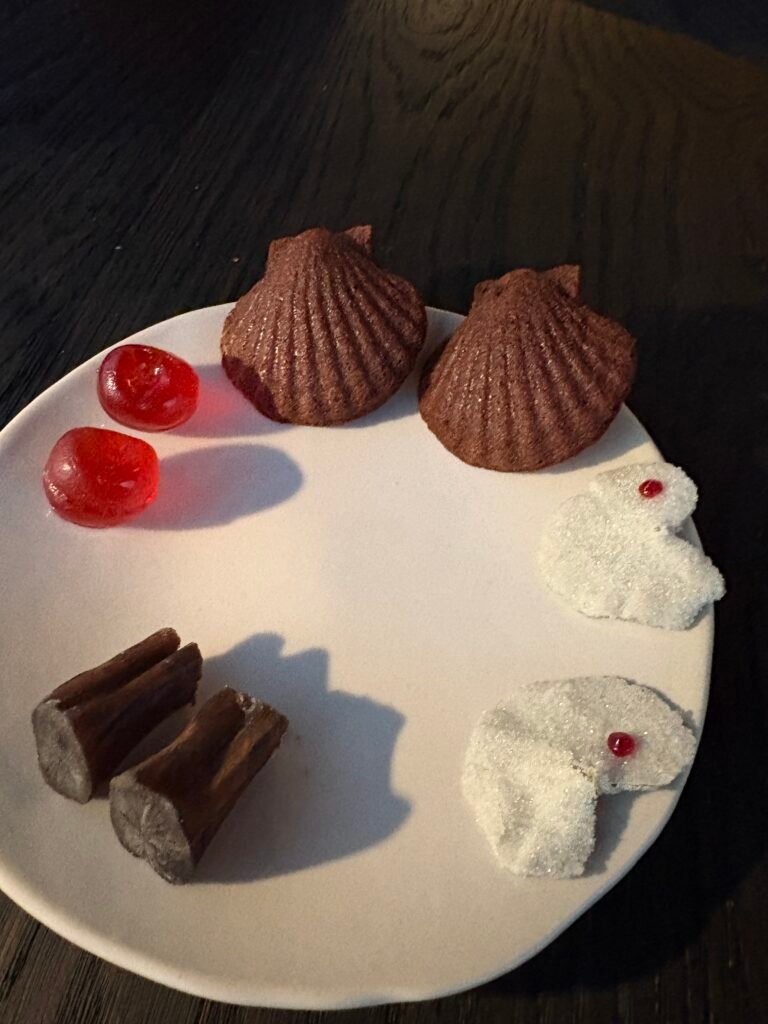
To round out the meal was a final series of mignardises: a shell-shaped madeleine, a frosted geranium leaf, a candied salsify, and “cherry”—an espelette pepper made to resemble a cherry. The standout for me was the cherry. It had a hit of sweetness to it with a backnote of encouraging spiciness. The other three served their minimum purposes: a filler in the meantime while we settled the checks. Not offensive but not particularly memorable.
To put a bow on all of this, I was extraordinarily happy that I got to experience Reverie before it closed for good. The menu was bold and inventive, and now I wait eagerly to see what’s next for Chef Spero—an obviously talented chef with an endlessly depressing string of bad luck.
It’s sad when a good thing ends and we can only pontificate on why we think this particular thing has ended, but in all of it there is something beautiful about what Reverie set out to achieve: it found a way in spite of the challenges it faced to make a mark in the Georgetown community that I don’t think will soon be forgotten. And that’s as good a legacy as any to leave behind. Cheers to Reverie!