The Soul of a Chef by Michael Ruhlman - Review
Three chefs strive for greatness in their own way in Michael Ruhlman's exploration of culinary perfection.
October 6, 2026
What makes so many chefs so focused on the relentless pursuit of perfection? If you’ve ever found yourself at a Michelin star restaurant, for example, you’ll find that the chase for that level of greatness imbues everything—informs everything. In The Soul of a Chef, Michael Ruhlman sets out to divine the origins of perfection in the craft of cooking (“craft” being a conscious word choice throughout the book; an ongoing aside he makes to convince his readers of his emphatic opinion that cooking is a craft, not an art—I personally am not convinced).
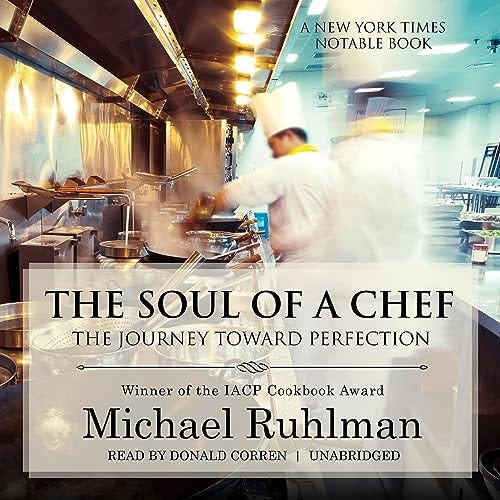
The book is divided into three parts telling three different stories of the pursuit of perfection. The first of which found Ruhlman undercover during an administration of the Certified Master Chef exam—a brutal 10-day culinary affair that drives a handful of dedicated chefs to the brink of their own destruction as they navigate the challenges simulating food preparation at the highest level to obtain the coveted title of Certified Master Chef. In the history of the exam (as of June 2026) there have been fewer than eighty chefs who have successfully passed the exam. Perfection for validation.
It’s a fascinating behind-the-curtain look that shows the reader the toll this level of mastery takes on a chef. The precision, the technique, the ability to think quickly on one’s feet. It is a test designed to reward those with the dedication to discover their own greatness and break those that fall short of its standards. Ruhlman emphasizes the dichotomy between the rigor of the exam and the perception and reputation of the exam in the culinary community writ large; many famous chefs known the world over for their culinary excellence openly denigrate the exam and its place in the world of cooking. Their argument: perfection for perfection’s sake contaminates the mission.
The other two parts of the book feature chef Michael Symon (who, since publication, had gone on to become a famous restaurateur and television personality) and Thomas Keller, owner of The French Laundry in Northern California and Per Se in New York City. Their stories of perfection are those of personal growth on the part of Symon as he attempts to foster the reputation of his budding café, Lola’s, and perfection of responsibility for Keller as his story of ascension in the American culinary scene is set and the obligation he feels for carrying out his mastery to its final form is realized.
Both run interesting parallels of a similar story as they show the attention to detail and to creativity that a chef must show to take their restaurants to another level. Symon is burdened with the arrival of a critic that threatens his restaurant’s existence. And while Michael Symon is wickedly talented in his own right, his narrative is one of learning to trust his own voice, finding comfort in his own internal guiding light rather than that of a critic’s pen.
Meanwhile, Keller wrestles with the complexities of building a machine that can keep up with the cultural influence of his flagship, The French Laundry—a restaurant that as of June 2026 has maintained its three-star distinction since the guide expanded to the Bay Area in 2007. Ruhlman sets out to discover if Keller has what it takes to live up to that standard of greatness he’s already achieved.
I found the first section of the book to be the most compelling. The narrative following the handful of chefs attempting to earn Master Chef distinction is the most poignant throughline of Ruhlman’s thesis, and I found myself wishing there were more pages dedicated to lifting the veil.
Keller’s section is fascinating for anyone with any interest in the greats of American cooking. The French Laundry has been a bastion for America’s newer generation of adventurous, creative chefs, and some of those chefs overlapped with the time Ruhlman spent there collaborating with Thomas Keller on the now-incredibly famous and successful French Laundry Cookbook. Grant Achatz of Alinea, René Redzepi of Noma, Corey Lee of Benu.
It’s been over two decades since Ruhlman found himself milling around the French Laundry property, but it must have been evident even at that point a few years into Keller’s ownership of the restaurant that it was special.
I’m especially struck by Keller’s evocative sense of humor, a cudgel against the hoity-toity-ness of traditional French restaurants, smashing down the barriers around haute cuisine. At The French Laundry, food can be delicious and impactful and creative and reverent and fun. And that certainly manifests, for example, on the menu today where one can find their persistently famous “Oysters and Pearls” tapioca dish, as well as their “Bread and Butter” (shoutout to the real ones who keep my brand awareness top of mind), both of which by name do not inspire a sense of elevated eloquence. But by all accounts are playful showstoppers in The French Laundry’s tasting menu procession.
I would also like to take a moment to point out that it’s hard to believe that The French Laundry tasting menu used to sell for $80/person (nowadays it’s more like $450; the fine dining inflation curve is out of control!). A frustrating fact when you consider their “Mac and Cheese” supplement alone costs twice as much as the entire tasting menu did in 2000 when Ruhlman wrote this book.
The Soul of a Chef is inspiring. It’s, at its core, three different sets of chefs pursuing greatness in meaningfully different ways. It’s not a tradition for the faint of heart. There is pride in the technicality of the practice and creativity that elevates a dish beyond that of its peers. It is meant to be consumed; it’s ephemeral. But the lengths chefs go to strive for flawless perfection are what makes it an art! There!, I said it. Cooking is an art. It doesn’t bend the knee to some standard of pretension to allow it that space. For my money, Ruhlman and I will just have to agree to disagree.